Gains.meme
Mobile memecoin trading app on Base
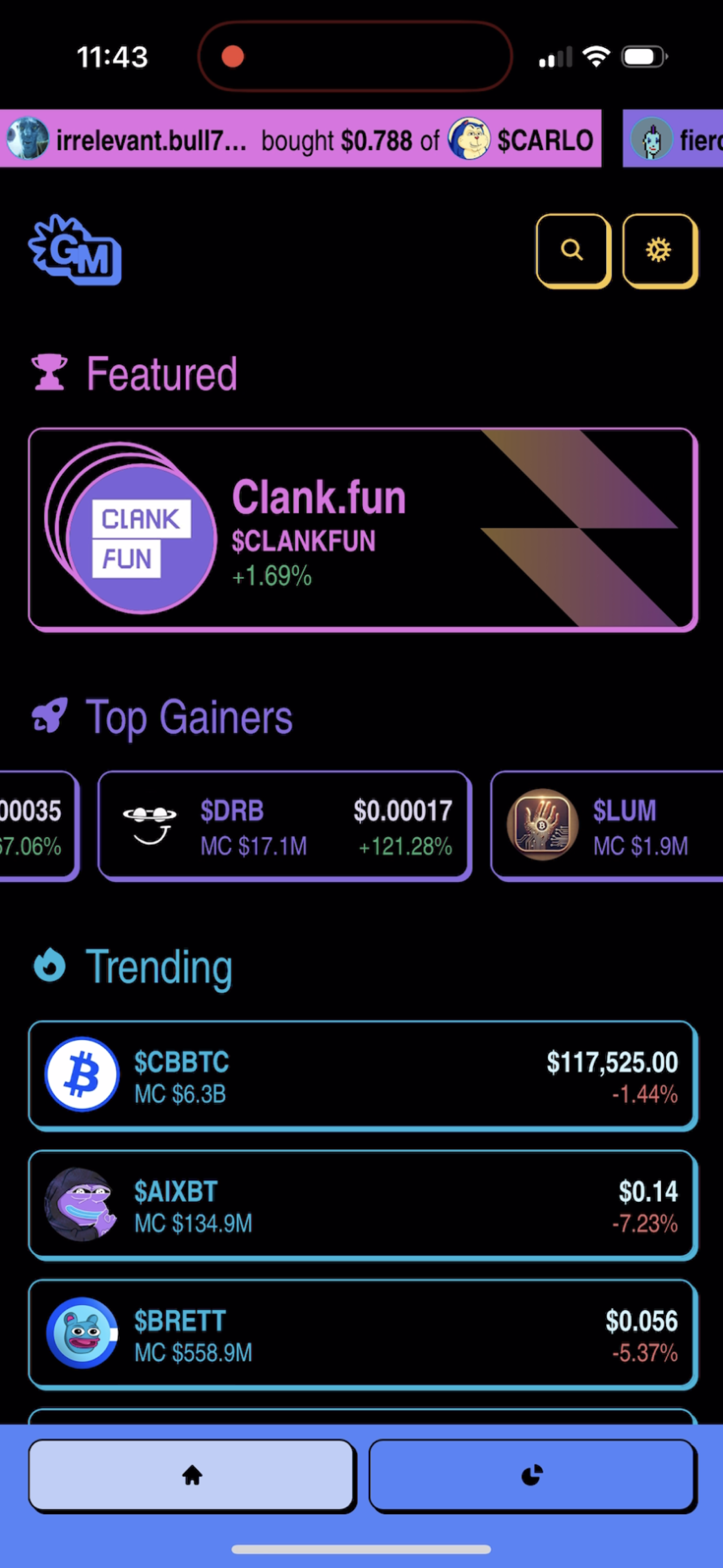
Gains.meme was a mobile memecoin trading app built to test whether reducing onboarding and execution friction could unlock retail trading demand on Base. I led product end to end, designing it as a focused experiment to validate a demand hypothesis.
Problem
Memecoin trading was accelerating across crypto, with Solana emerging as the dominant ecosystem for high-velocity retail speculation. Base lacked a comparable experience optimized for fast discovery and first trade.
Existing tools were slow, fragmented, and intimidating for new participants. Wallet setup, gas management, and execution friction created barriers before users could even place a trade.
The question was whether reducing time-to-first-trade through better UX could unlock latent demand on Base, or whether demand followed liquidity and ecosystem momentum regardless of product quality.
Ownership
I owned product for Gains.meme end to end, including onboarding, discovery, trading UX, and execution tradeoffs.
Key constraints shaped the approach:
- memecoin trading is extremely time-sensitive
- users have low tolerance for setup friction
- demand is ecosystem- and narrative-driven
- execution reliability matters more than polish
The product needed to answer the demand question quickly without over-investing in features that might not matter.
Insights
Early usage revealed clear patterns:
- users strongly preferred email-based onboarding over wallet-first flows
- fast execution mattered more than advanced controls
- discovery drove curiosity, but repeat trading depended on ecosystem momentum
Despite successfully reducing friction to first trade, retention plateaued quickly. First-trade completion rates were strong (around 70%), but week-2 retention dropped to under 10%. Users explored the app and placed initial trades, but did not return at scale.
The signal was clear: UX was not the primary bottleneck. Trading activity correlated more strongly with broader Base ecosystem narratives than with product improvements alone.
Tradeoffs
I made intentional choices to maximize learning speed.
Simplify onboarding aggressively
Users could sign up with email and trade immediately, deferring wallet complexity until later. This reduced time-to-first-trade from minutes to under 30 seconds.
Optimize for speed over depth
I deprioritized advanced tooling in favor of getting users to their first trade as fast as possible. The interface was deliberately minimal.
Limit scope by design
The product was built to validate demand, not to become a full-featured trading platform. This allowed rapid iteration without accumulating technical debt.
These tradeoffs allowed me to test the core question without over-investing.
Execution
I shipped Gains.meme as a mobile-first experience with:
- email-based account creation
- multiple funding options including wallets, cards, and bank transfers
- simple discovery surfaces for trending memecoins
- fast buy and sell execution with transparent fees
Iteration focused on onboarding flow, execution speed, and reducing cognitive overhead during the first trade.
Impact
The product successfully reduced friction to first trade and validated several UX assumptions around onboarding and execution.
Users completed initial trades but did not return. Trading volume remained concentrated during brief narrative-driven spikes rather than growing organically. I shut down the product after three months once the signal became unambiguous.
Learnings
Gains.meme reinforced that product polish cannot manufacture demand in speculative markets.
Distribution, liquidity, and narrative gravity matter more than UX improvements alone. Users will tolerate friction if the opportunity is compelling, and no amount of polish will create sustained engagement without underlying market momentum.
If I were building this again, I would have focused on Base ecosystems with existing liquidity and trader density first, rather than betting that better UX could bootstrap demand from scratch. I also would have tested the retention hypothesis earlier with a smaller surface area rather than building the full onboarding and execution flow upfront.
This experience informed later decisions to prioritize markets with demonstrated demand and to treat UX as an amplifier of existing behavior, not a substitute for market fundamentals.